
The year 2023, as is well known, was declared by the Romanian Patriarchate A Year Dedicated to Hymnographers and Church Singers, thus complementing The 2022 Commemorative Year Dedicated to Prayer, since church singing is itself a prayer.
His Beatitude Daniel, Patriarch of the Romanian Orthodox Church, states “Theology The language used in church hymns is one of the richest in meaning and, at the same time, one of the most enlightening for the faithful of our Church; therefore, it should be made greater use of in today’s sermons and catechesis. ”
We all know that among the most important hymnographers of our Church were St. Roman the Melodist, St. John of Damascus, St. Andrew of Crete, St. Cosmas of Maiuma, St. Theophanes the Confessor, and many others.
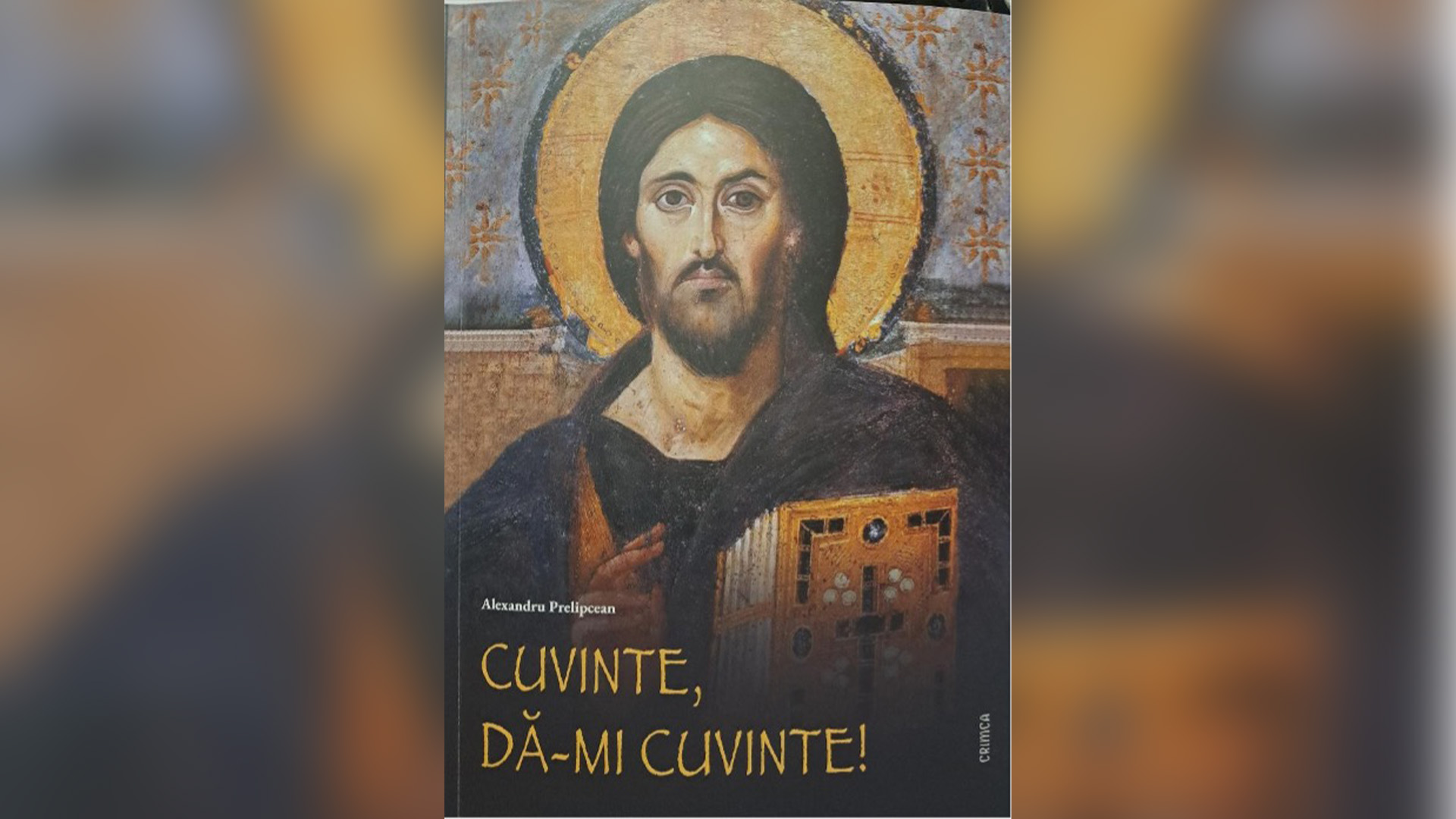
In this context, Dr. Alexandru Prelipceanu, assistant professor at the “Dumitru Stăniloaie” Faculty of Orthodox Theology in Iași, has published—following extensive and in-depth research both in Romania and abroad—this study on BIOS hagiographic, on philology and theology Roman the Humble with the hope of facilitating a reunion in this way with the Byzantine hymnographer who can always be viewed as a true paradigm for the contemporary Christian world – as the author himself points out.
Therefore, this work, which we present to our readers—published under the auspices of the prestigious Crimca Publishing House of the Archdiocese of Suceava and Rădăuți—is a reunion with Roman the Melodist— the patron saint of church singers, considered„The Pindar of rhythmic poetry,” „the Hellenic-Syrian magus,” or „the master of melodies””, an opportunity to get to know it even better poetic theologyand Byzantine theological poetry, that is, for the reader to have a means of perceiving much more deeply the dialogical relationship that must exist between man and God.
The subtitle of this book, From the Life of the “Humble Roman” to the Poetic Theology of the Byzantine Melodist has a special significance, helping us understand the title of the book in which the author used two phrases attributed to Saint Roman the Melodist, the theologian and poet, who, through his ecclesiastical poetry, conveyed the loftiness of theological teaching.
As Academician Virgil Cândea rightly said, “Few works of world literature contain such a density of paradoxes, the evocation of so many events beyond nature and human understanding—brought about by the supreme Theophany of the Incarnation of the Logos—and expressed with such economy of words, in just a few verses” “since what Roman the Melodist left behind" successfully combines the solemnity and dignity of a religious sermon with the delicacy and liveliness of lyric and dramatic poetry”.
Who does not know and does not particularly understand the meaning of the first verse of Holy Scripture “In the beginning was the Word, and the Word was with God, and God was the Word.”.
The title of this book has a special meaning—a play on words—which is, of course, based on the relationship between human words and The divine-human Word – as the author himself says in Prologue.
Right from the start, the author draws our attention to the exhortatory verse “Give me a word, Words; don’t let me pass by in silence”that is, for each of us to acquire metamorphosis our words, based on the Words of the Creator of all things.
This edition of the work, which presents the original Greek text alongside the Romanian translation, is divided into ten chapters.
The first chapter, titled Saint Roman the Melodist – the consummate hymnographer of Orthodoxy, and the most substantial in terms of page count—as one might expect—presents several hagiographic highlights and the work of the Melodist.
The following chapter sets out to—and succeeds in—showing how those bridges connecting the East and the West can be discerned with regard to the Jewish origins of St. Roman The Melodist, so that in the next chapter he can explain to us what it means The Kontakion as a new genre of Byzantine hymnography, whose defining feature is the close connection between words and music.
We find the approach in the chapter The Influence of Saint Roman the Melodist on the Great Canon of Saint Andrew of Crete: Some Remarks on Christological Typology concluding that Andrei of Crete, according to Elpidio Mioni, should be counted among the imitators of Roman the Melodist and will oppose B. Baldwin's view that Roman the Melodist was not imitated (p. 198).
One chapter that is particularly noteworthy is The Kontakion “IN EVERY EARTHQUAKE AND FIRE” by Saint Romanos the Melodist, or On the Theological Interpretation of History, in which the author of this book presents Roman the Melodist’s poetic reflections; drawing on the historical realities of his own time, he composes a A Theological Hermeneutics of History, regarding Constantinople's rise from its own ashes like the Phoenix.
The paper concludes with The Dialogical Drama Between the Old Man and Christ—The Unapproachable Light, or On the Christological Hermeneutics of the First Romanian Kontakion Dedicated to the Epiphany, concluding that The Great Melodist does nothing but introduce the world to the mystery of salvation.
This is a work I recommend to anyone who wants to learn about and explore the beauty of 6th-century Byzantine hymnography.
