
SfThe Holy Chalice
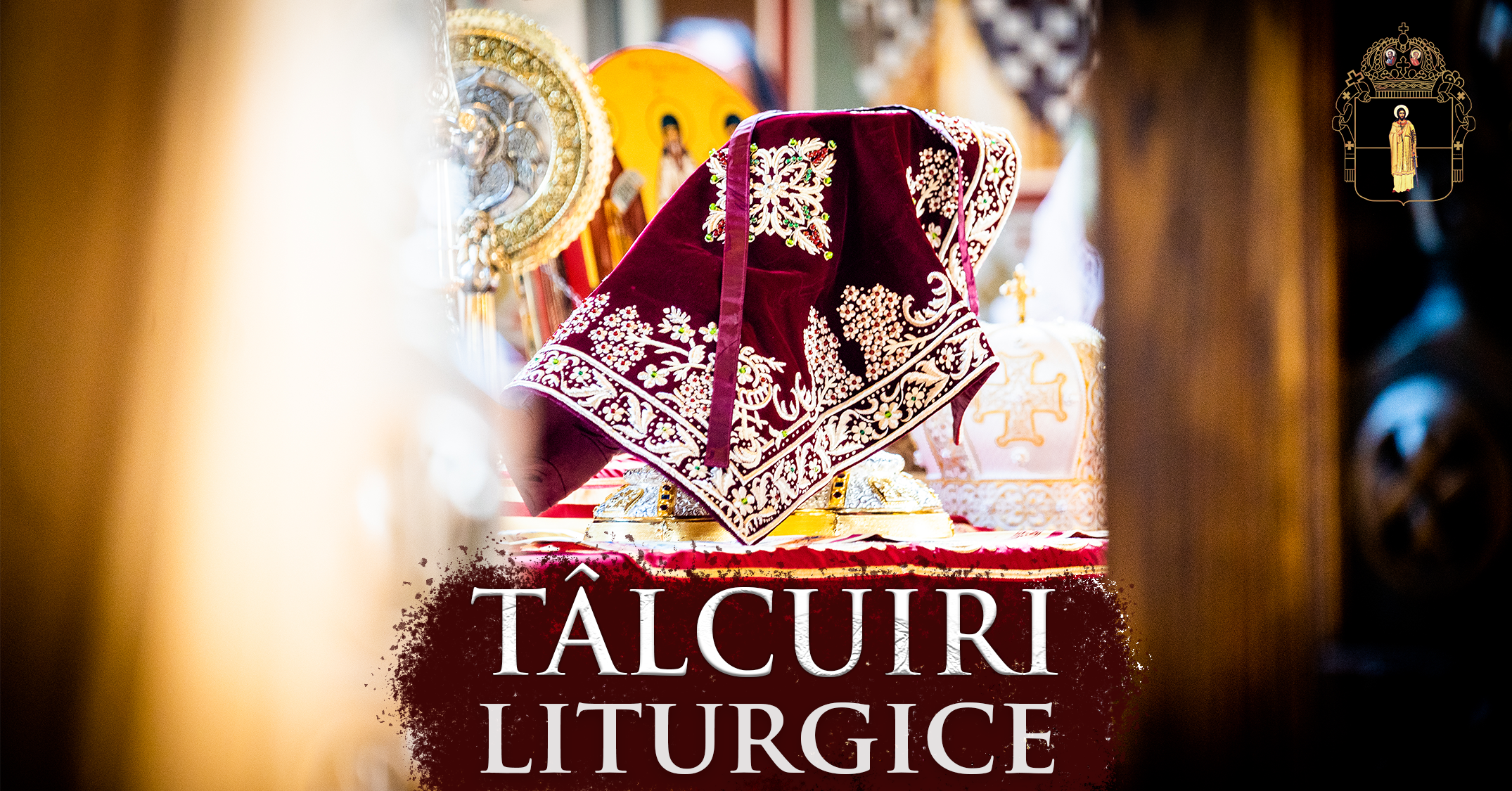
The Holy Chalice is a liturgical vessel in the shape of a beaker or a footed cup. It is a holy object in which the wine mixed with water prepared at the proschumider is placed. Through the consecration during the Divine Liturgy they become the Blood of the Savior Christ from which the ministers and the faithful partake. In the past, the name „potirion” referred more to the content, i.e. the Eucharistic wine. In the light of the importance of the ministry served, the Holy Fathers and ecclesiastical writers have given the chal chalice the most appropriate names: holy, mystic, duhovnicesc, împărătesc, savior ș. a. (Pr. Prof. Dr. Ene Braniște, prof. Ecaterina Braniște, Encyclopedic dictionary of religious knowledge, Editura diecezană Caransebeș, 2001, p. 378).
The sharing from one chalice by the Christians of a Eucharistic community has always been seen as a symbol of the unity and communion in Christ of all the members of that community.
This vessel was used by the Lord Christ at the Last Supper, when he instituted the Sacrament of the Eucharist: „And he took the cup, and when he had given thanks, he gave it to them, saying: Drink from this, all of you” (Matthew 26:27), and the Holy Apostles also used it, following the Savior's example.
The Holy Chalice prefigures both the cup of the Last Supper and the cup in which, according to tradition, St. John the Evangelist would have collected the blood that flowed from the wounds of the Savior at His crucifixion on the cross (Pr. Ene Braniște - Ghenadie Nițoiu - Gheorghe Neda, Theoretical liturgy, Credința Noastra Publishing House, Bucharest, p. 121).
The exclusive use of the Holy Chalice by the ordained ministers of the Church has been established by the holy canons, such as Canon 25 of the Synod of Laodicea (343), which states that „It is not proper for an inferior minister to offer the Holy Bread nor to bless the chalice” (Arch. Ioan N. Floca, Canons of the Orthodox Church, Sibiu, 2005, p. 245).
Because of its importance, the faithful make it out of precious metals, gold or silver gilded. Also, out of piety, emperors and wealthy Christians donated vases and ornaments made of precious metal to churches. Some of them are still preserved in the museums of the monasteries of the voivode monasteries.
The Holy Disk
The holy disk is a vessel in the shape of a taler or tipie with a foot, made of silver or other metal, usually gilded (Pr. Ene Braniște - Ghenadie Nițoiu - Gheorghe Neda, Theoretical liturgy, Editura Credința Noastra, Bucharest, p. 122). This is a paired vessel with the Holy Chalice.
The Proscomidie, Holy Agneț symbolizes the Saviour Christ, and the sp sprinkles symbolize the Mother of God, the saints and all those who are commemorated, living or dead in the Lord. Therefore, on the Holy Disk we have the full image of the Church in heaven (victorious) and on earth (struggling).
On this liturgical object is placed the Holy Agneț. It represents the bed (the cot) on which Joseph and Nicodemus laid the body of the Lord, after His descent from the Cross and His going to the grave, (Pr. Prof. Univ. Dr. Ene Braniște, Special Liturgy, Ed. Basilica, București, București, 2016, p. 394) and the round shape imagines the sky (Pr. Ene Braniște - Ghenadie Nițoiu - Gheorghe Neda, Theoretical liturgy, Editura Credința Noastra, Bucharest, p. 122), as St. Simeon, Archbishop of Thessalonica, teaches us: „The disk is a representation of Heaven, and therefore it is round and contains the Lord of Heaven... (St. Simeon, Archbishop of Thessalonica, A treatise on all the dogmas of our orthodox faith, according to the principles laid down by our Lord Jesus Christ and his followers, translation by Toma Teodorescu, Vol. I, Editura Arhiepiscopiei Sucevei și Rădăuților, Suceava, 2002, p. 136).
Star (Zveazda)
The star consists of two curved metal strips, joined in the middle by a screw with the Holy Cross or a metal star on top. Petre Vintilescu, Liturgy explained, Editura Institutul Biblic și de Misiune Ortodoxă, Bucharest, 1972, p. 134).
It rests on the holy disk and reminds us of the star that appeared at the Savior's Nativity and guided the Magi to the cave of Bethlehem: And, behold, the star which they had seen in the east went before them, until it came and stood over where the Child was. (Matthew 2, 9). Prof. Univ. Dr. Ene Braniște, Special Liturgy, Ed. Basilica, București, 2016, p. 392).
Another symbolism of the star is related to its touching of the four parts of the Holy Discus, at the „Song of Victory singing, shouting, shouting, shouting and speaking” ecphonsis, representing the song of the four angels in the vision of St. John the Apostle and Evangelist, depicted in the book of Revelation 4, 6-8 (Pr. Vasile Mitrofanovici, Liturgy of the Orthodox Church. University courses, Romanian Orthodox Eparchial Council of Bukovina, Cernăuți, 1929, p. 568).
Bibliography
- Pr. Prof. Dr. Ene Braniște, Prof. Ecaterina Braniște, Encyclopedic dictionary of religious knowledge, Editura diecezană Caransebeș, 2001.
- Pr. Ene Braniște - Ghenadie Nițoiu - Gheorghe Neda, Theoretical liturgy, Credința Noastra Publishing House, Bucharest.
- Arhid. Ioan N. Floca, Canons of the Orthodox Church, Sibiu, 2005.
- Pr. Prof. Univ. Dr. Ene Braniște, Special Liturgy, Ed. Basilica, București, 2016.
- St. Simeon, Archbishop of Thessalonica, A treatise on all the dogmas of our orthodox faith, according to the principles laid down by our Lord Jesus Christ and his followers, translation by Toma Teodorescu, Vol. I, Editura Arhiepiscopiei Sucevei și Rădăuților, Suceava, 2002.
- Pr. Petre Vintilescu, Liturgy explained, Publishing House of the Biblical and Orthodox Mission Institute, Bucharest, 1972.
- Pr. Vasile Mitrofanovici, Liturgy of the Orthodox Church. University courses, Romanian Orthodox Eparchial Council of Bukovina, Cernăuți, 1929.
Prof. Chiriac Pavel
Secretary in the Pastoral Mission and Christian Current Events Sector
